Meeting House & Burial Ground
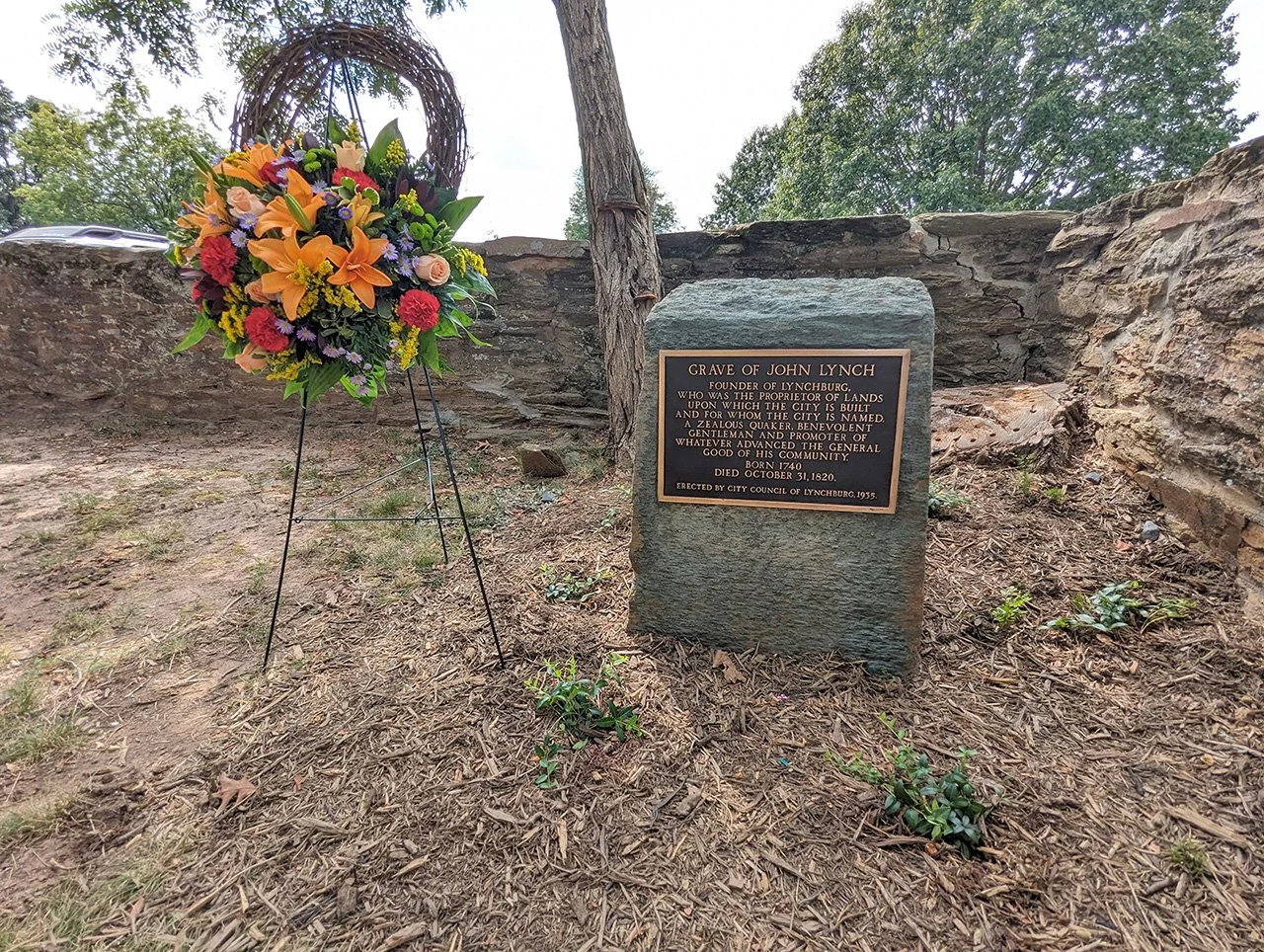
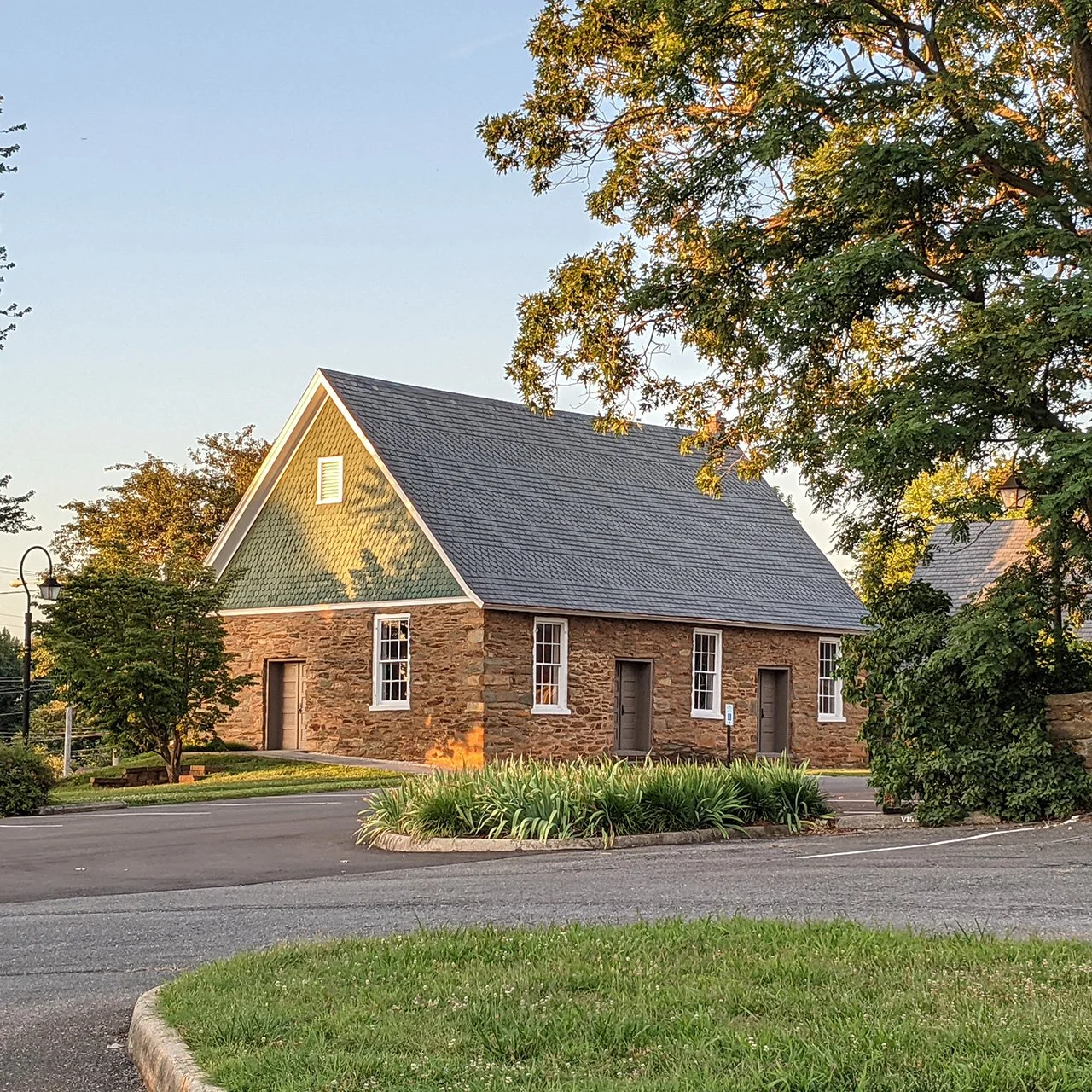
The South River Meeting House and its adjoining graveyard are the most sacred historical sites in Lynchburg today. Not only does part of the structure date to the earliest days of Lynchburg, but also the city’s founder is buried there.
Early Meeting House History
In 1791 John Lynch, Sr., donated ten acres of land to the South River Quaker Meeting and construction began on a stone meeting house for local “Friends.” The two-room house of worship was completed seven years later in 1798.
For the next 45 years worship meetings were held in the modest stone structure, through nine U.S. presidents, the War of 1812, Nat Turner’s Rebellion, growing sectionalism, westward expansion, industrialization, and rapid technological advancements. The South River Meeting House was finally abandoned in 1843 after years of declining membership and out-migration.
South River Meeting House
Through the Years
-
![]()
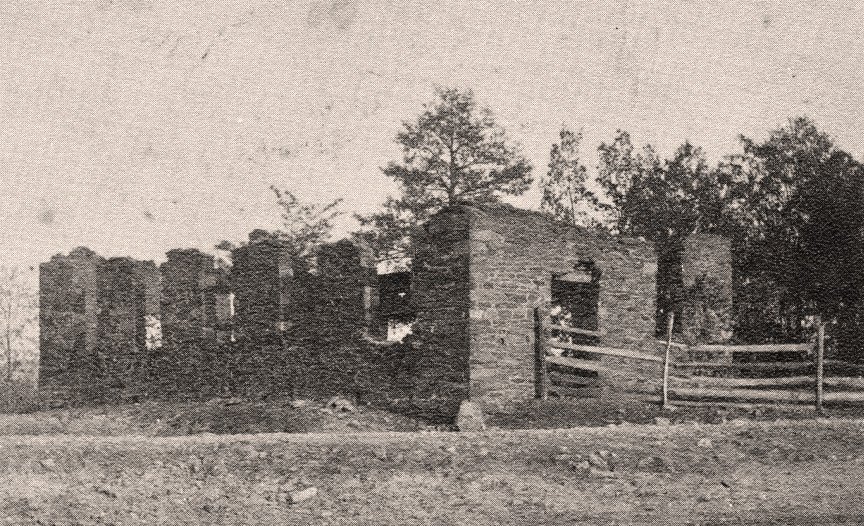
Circa 1880
Photograph by A.H. Plecker, used as engraving in Pollock & Judson’s 1887 Sketch Book of Lynchburg
-
![]()
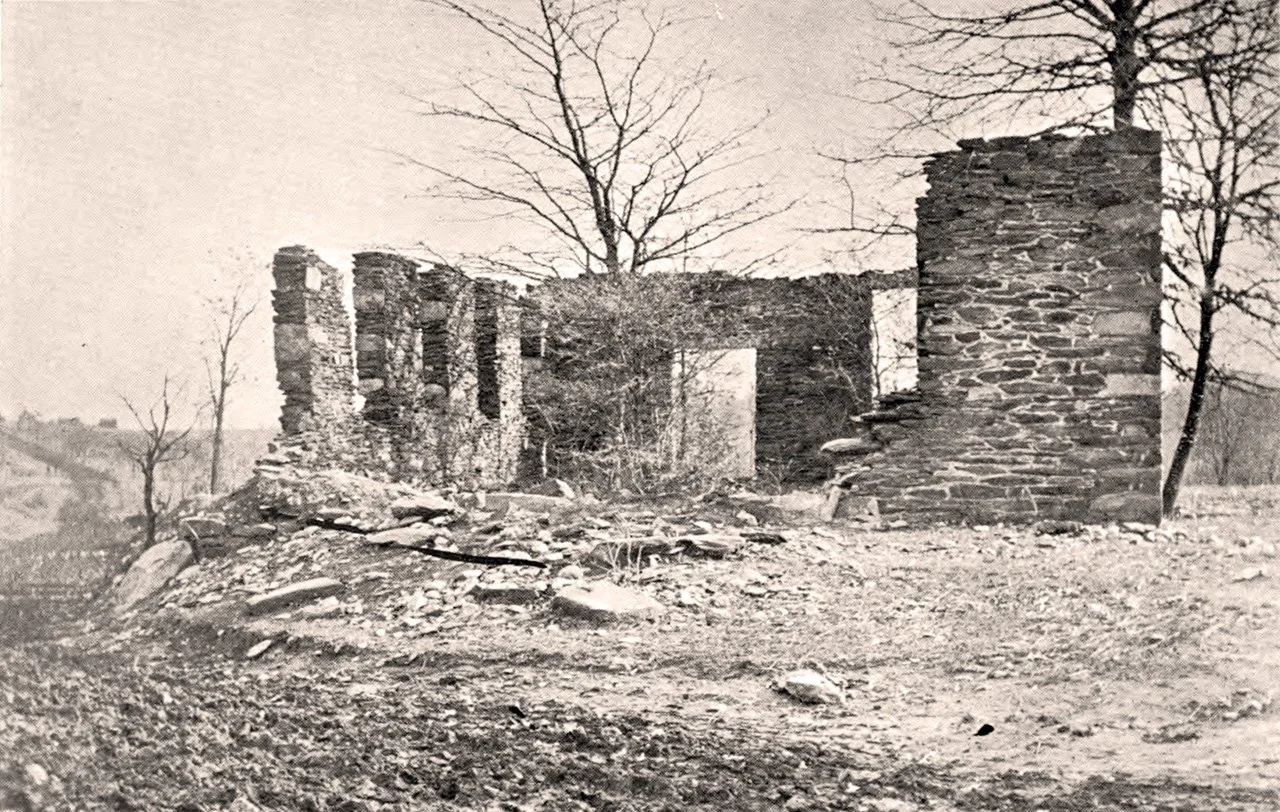
Circa 1895
Present day Fort Avenue is visible to the left of the ruins.
-
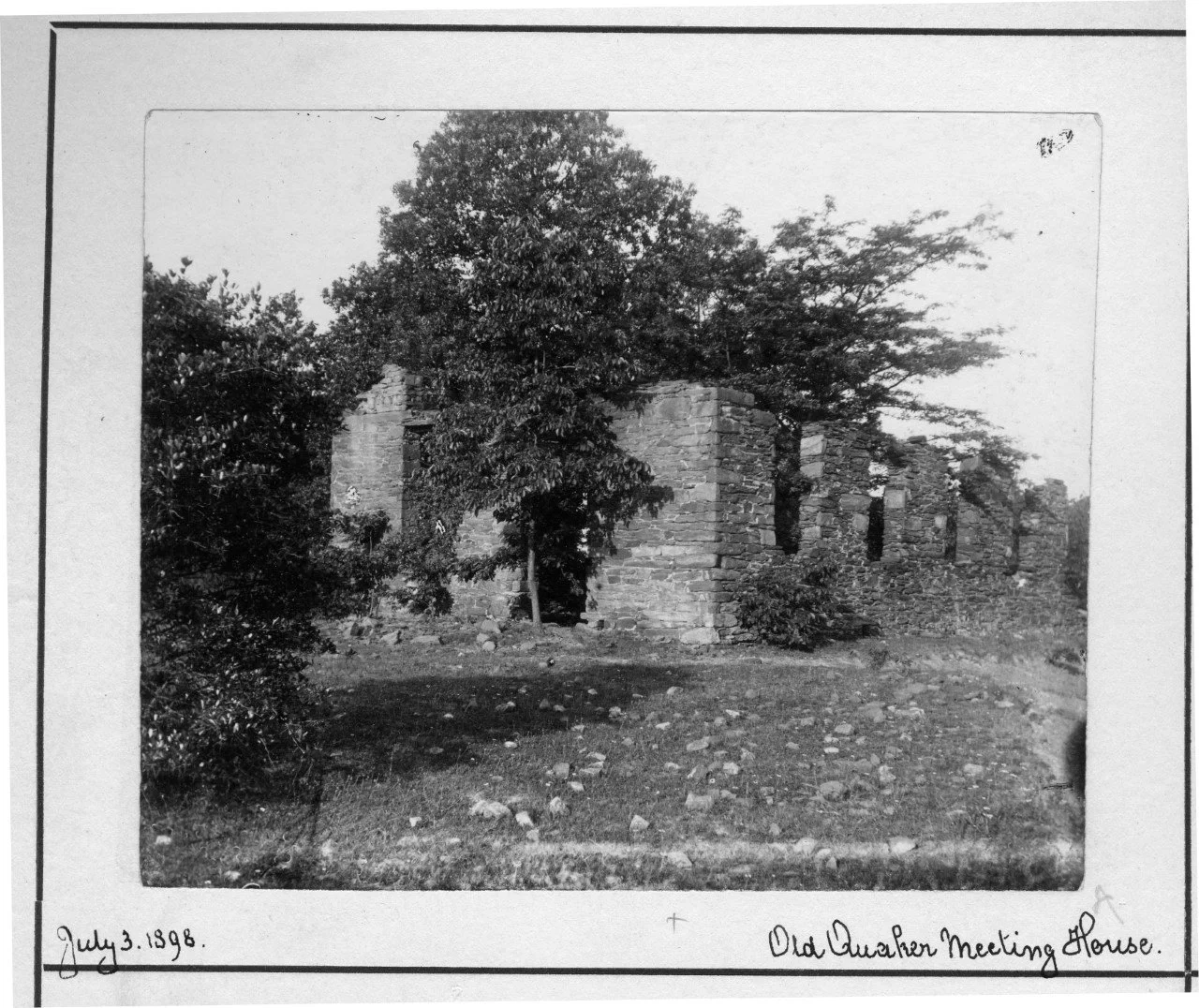
![]()
1898
Courtesy of Jones Memorial Library
-
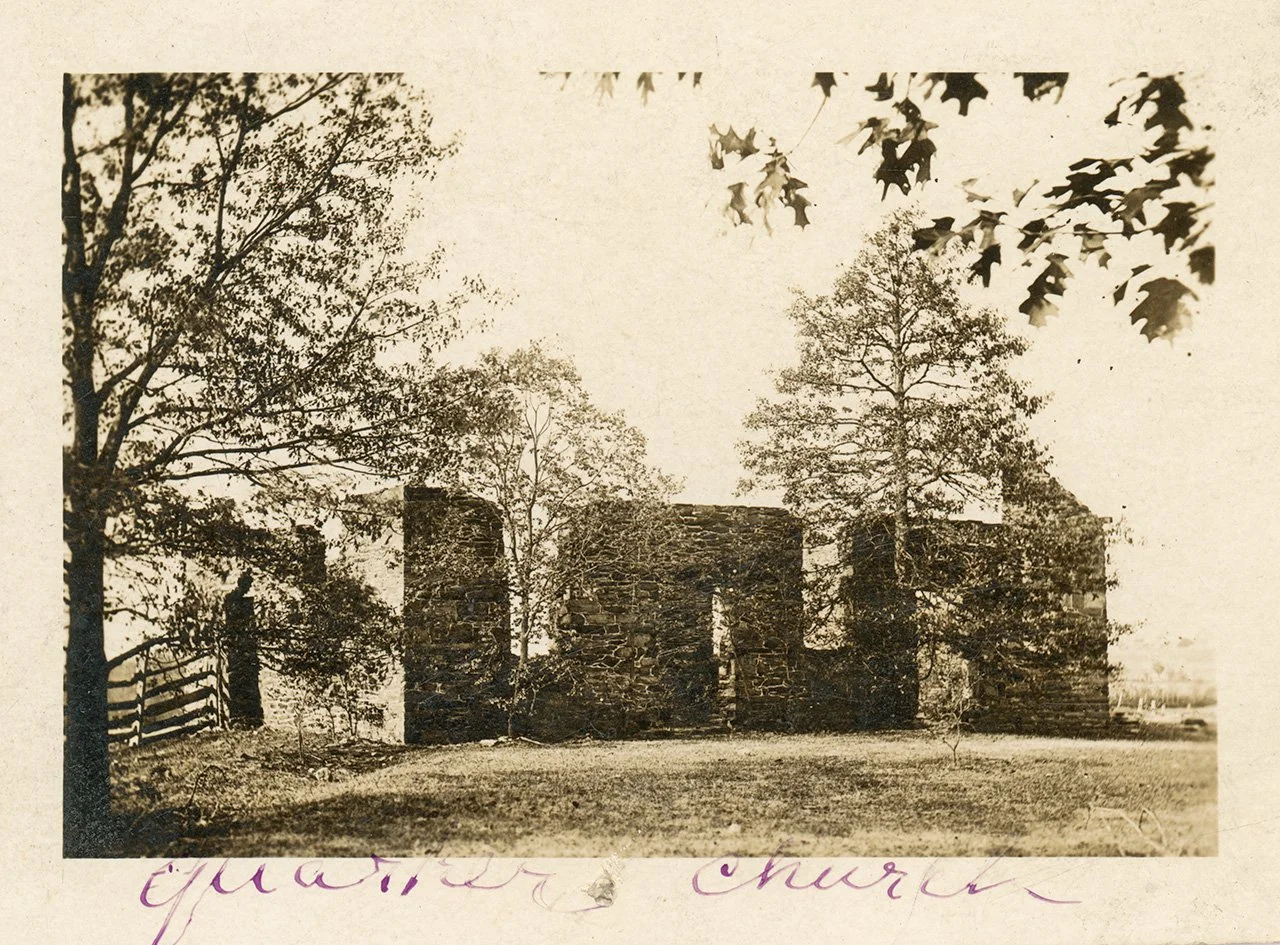
![]()
Circa 1900
-
![]()
1902
Very close to the initial restoration in 1900-1901
-
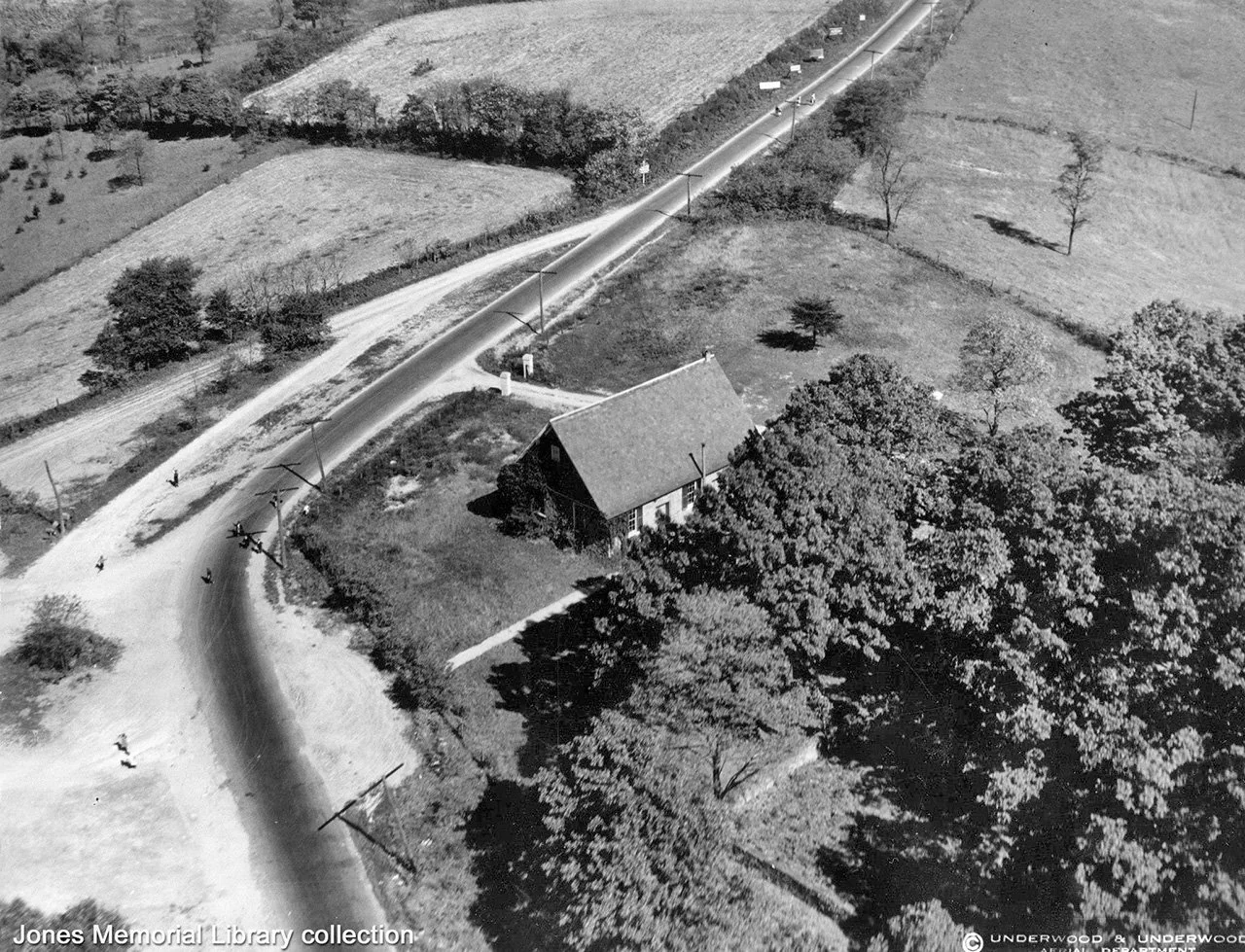
![]()
1923
Courtesy of Jones Memorial Library
-
![]()
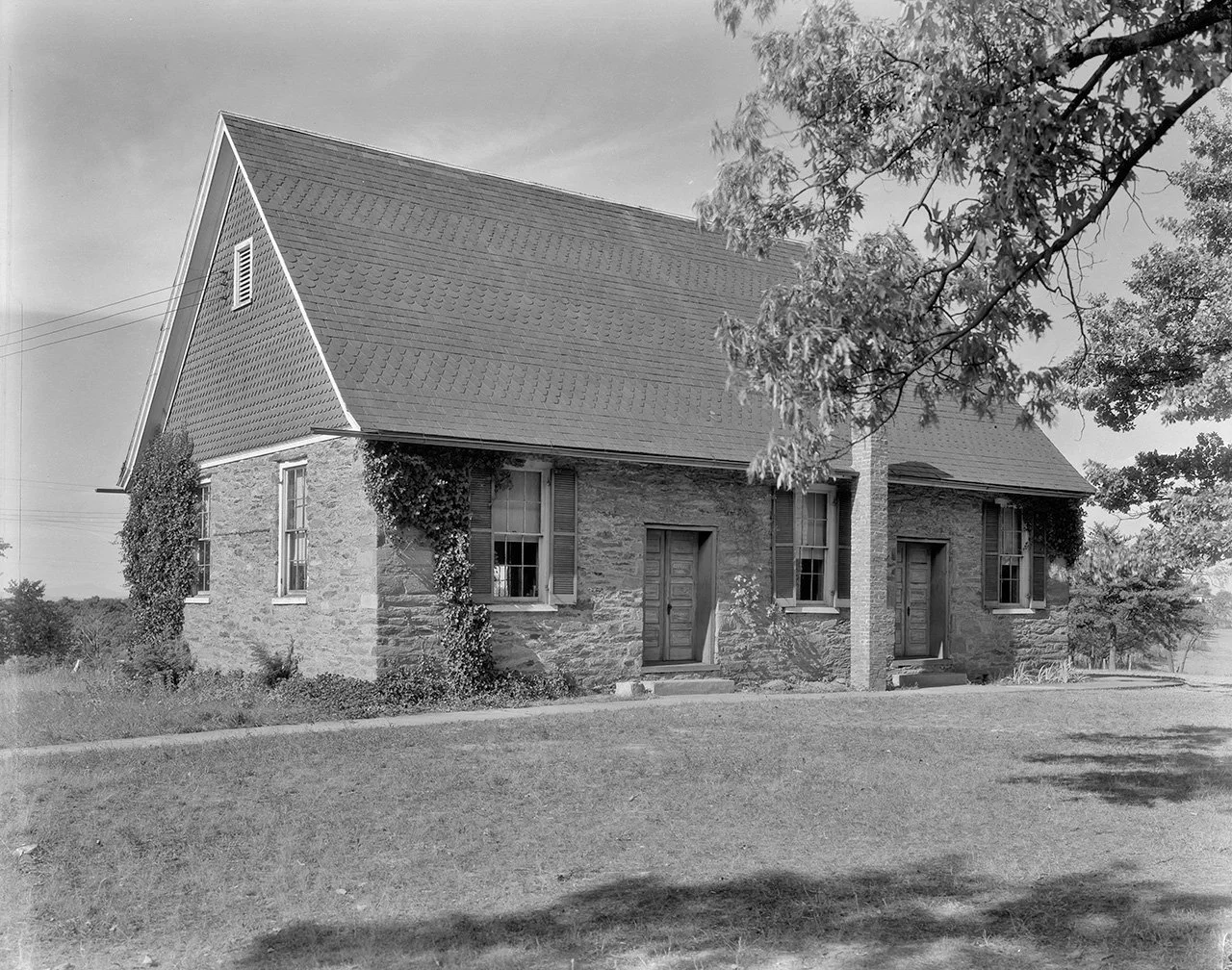
Circa 1935
Photograph by Frances B. Johnston, Library of Congress
-
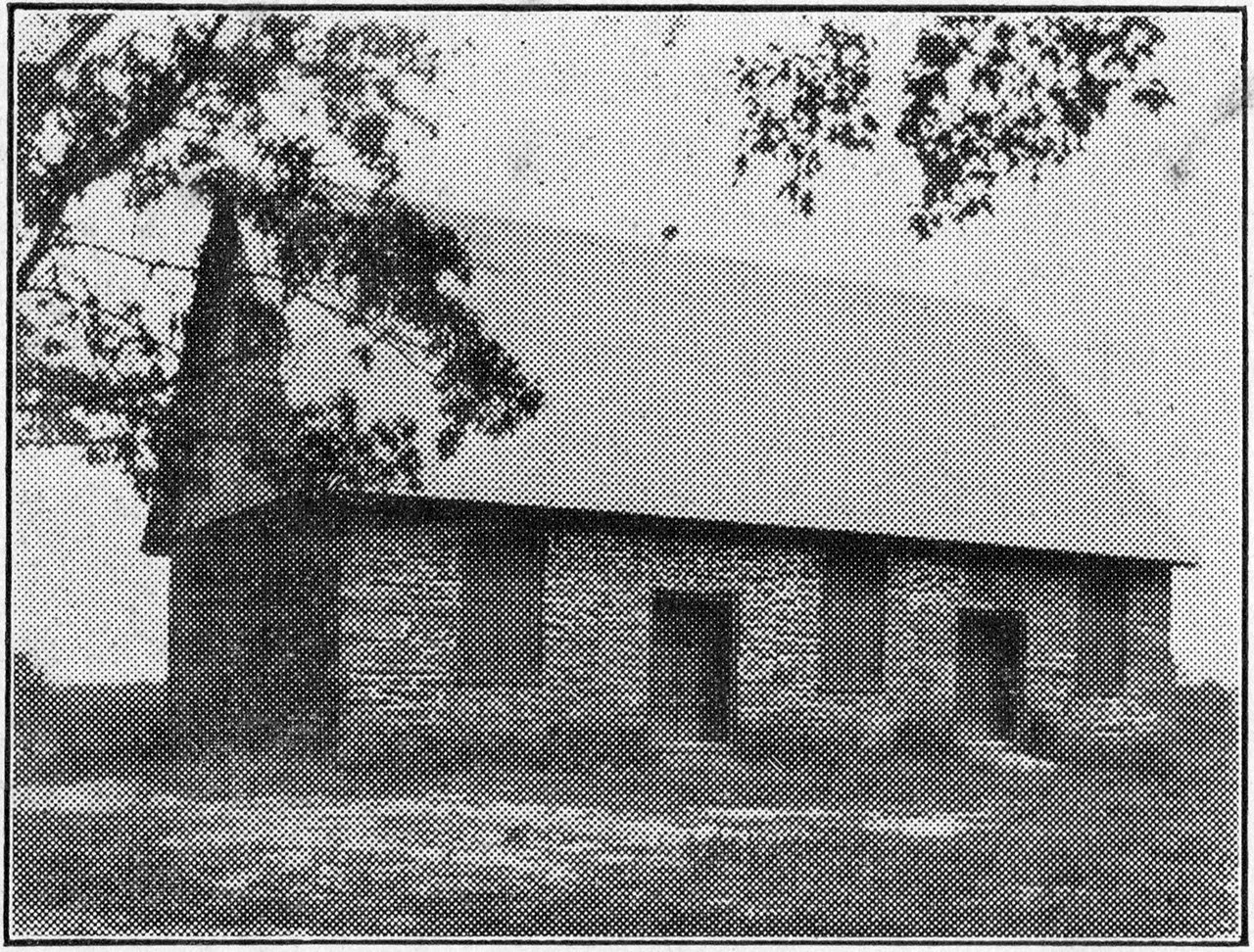
![]()
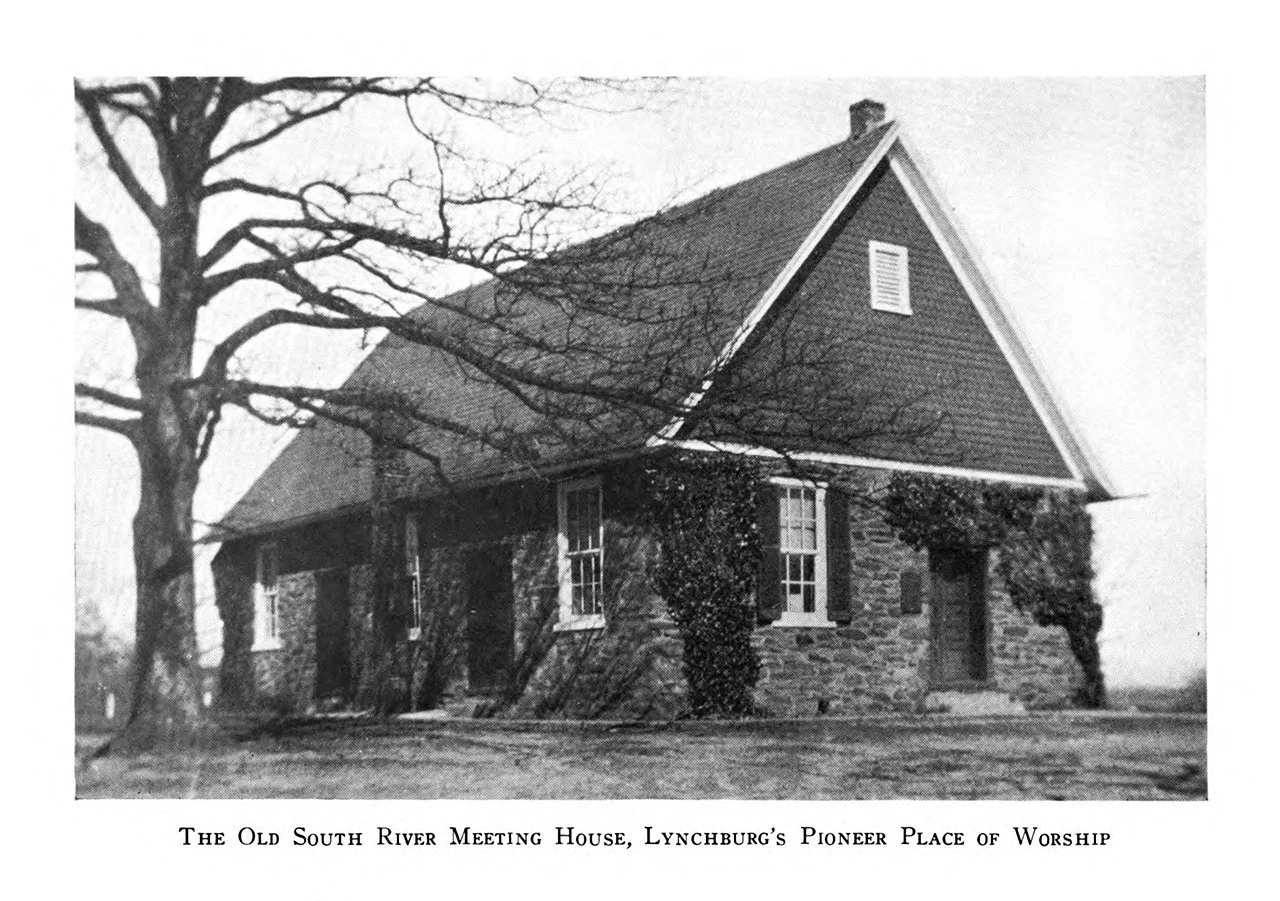
1936
Image from Douglas Summers Brown’s book, Lynchburg’s Pioneer Quakers and Their Meeting House
-
![]()
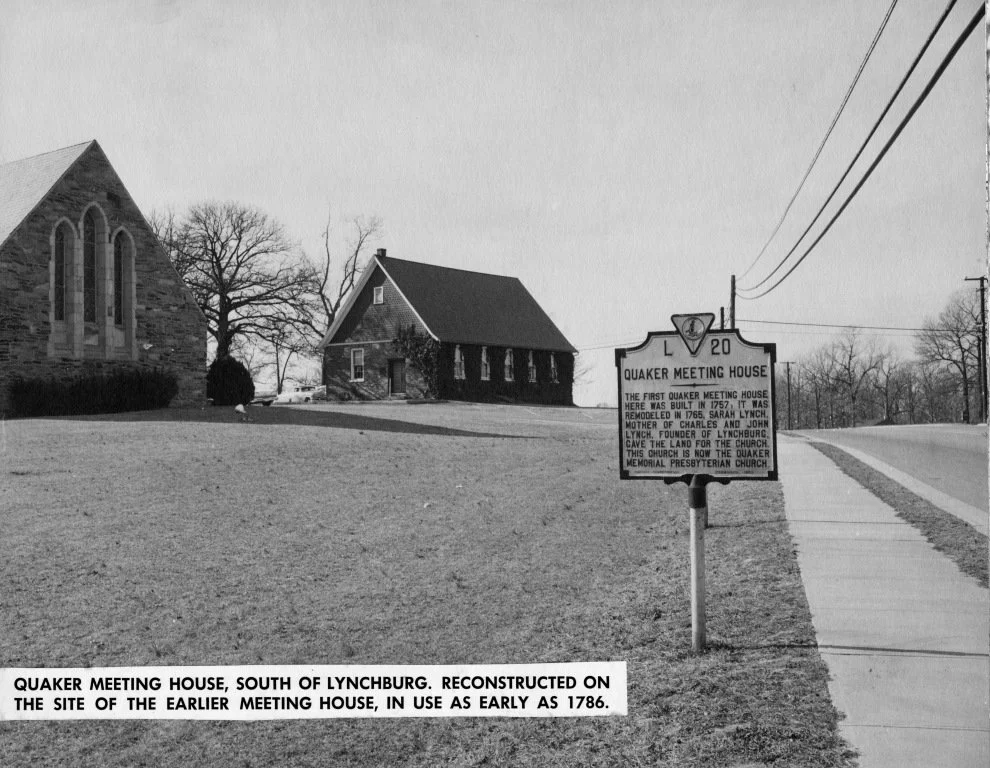
Circa 1965
Courtesy of Lynchburg Museum System, Gift of Fidelity National Bank, 69.45.10
-
![]()
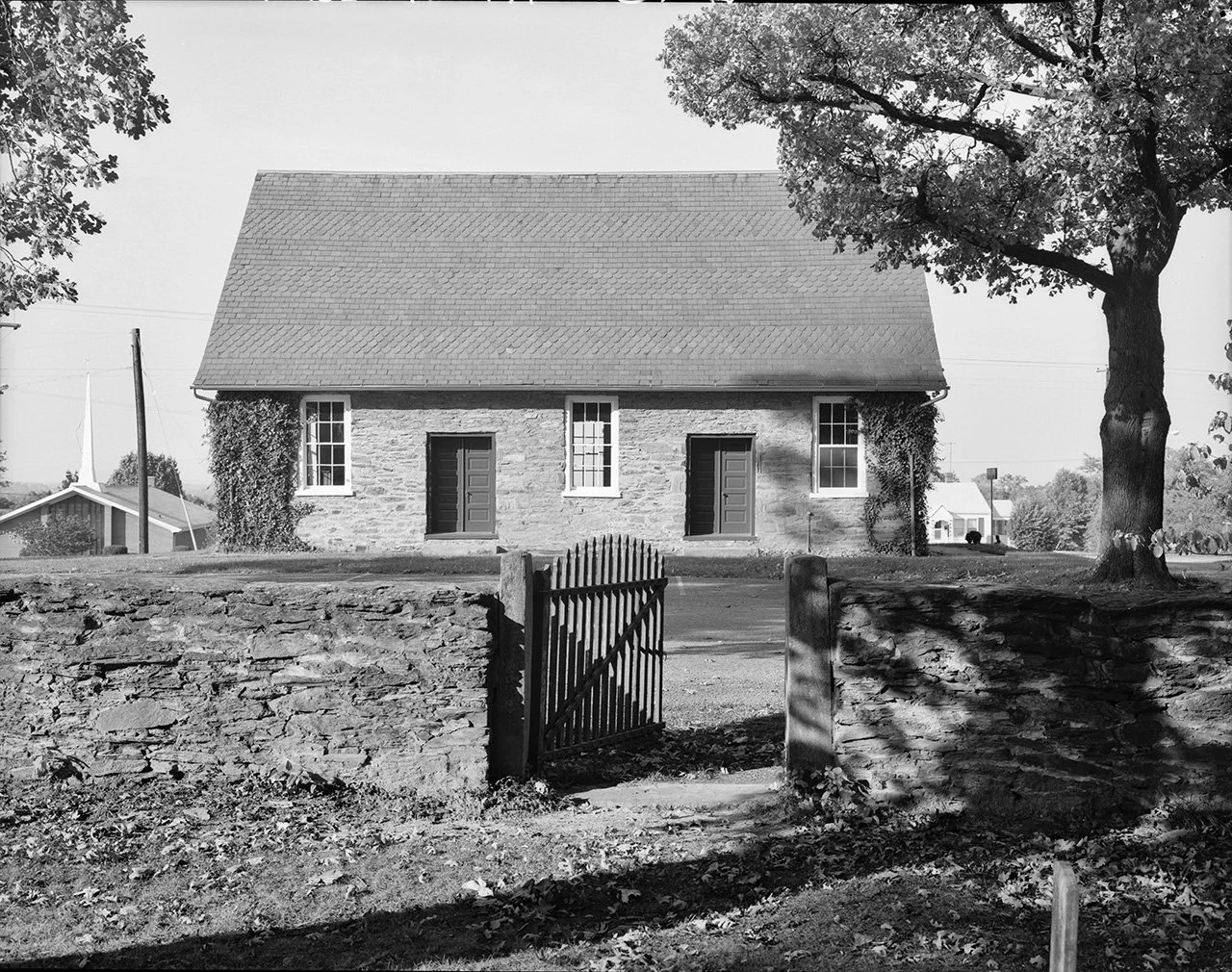
Circa 1965
The gate and wall in the foreground enclose the South River Quaker Burial Ground.
Restoration & Reconstruction
By the end of the 1800s, the roof of the Meeting House had collapsed, and the building had fallen into ruins with little remaining except three walls. Presbyterians began holding Sunday School classes on the property, and in 1899, they bought the ten acres of land on which the Meeting House ruins and Burial Grounds are located from the Richmond Society of Friends for $25.
The Presbyterians rebuilt the ruins for use as their church, naming it Quaker Memorial Presbyterian Church, and services were conducted there from 1901 until completion of a new separate building in 1951. At this time, the congregation decided to make the former Meeting House an historic shrine and began efforts to restore it to its original appearance, though restoration work was discontinued due to insufficient funds.
In 1936, Douglas Summers Brown, a local author, historian, and wife of the Quaker Memorial Presbyterian Church’s minister, wrote a detailed account of the South River Friends. Her book, Lynchburg Pioneer Quakers and Their Meeting House, remains the most focused source of information about the area’s early Quaker community and their Meeting House.
In 1975, the Meeting House and Quaker Cemetery were named a Virginia Historic Landmark and listed in the National Register of Historic Places.
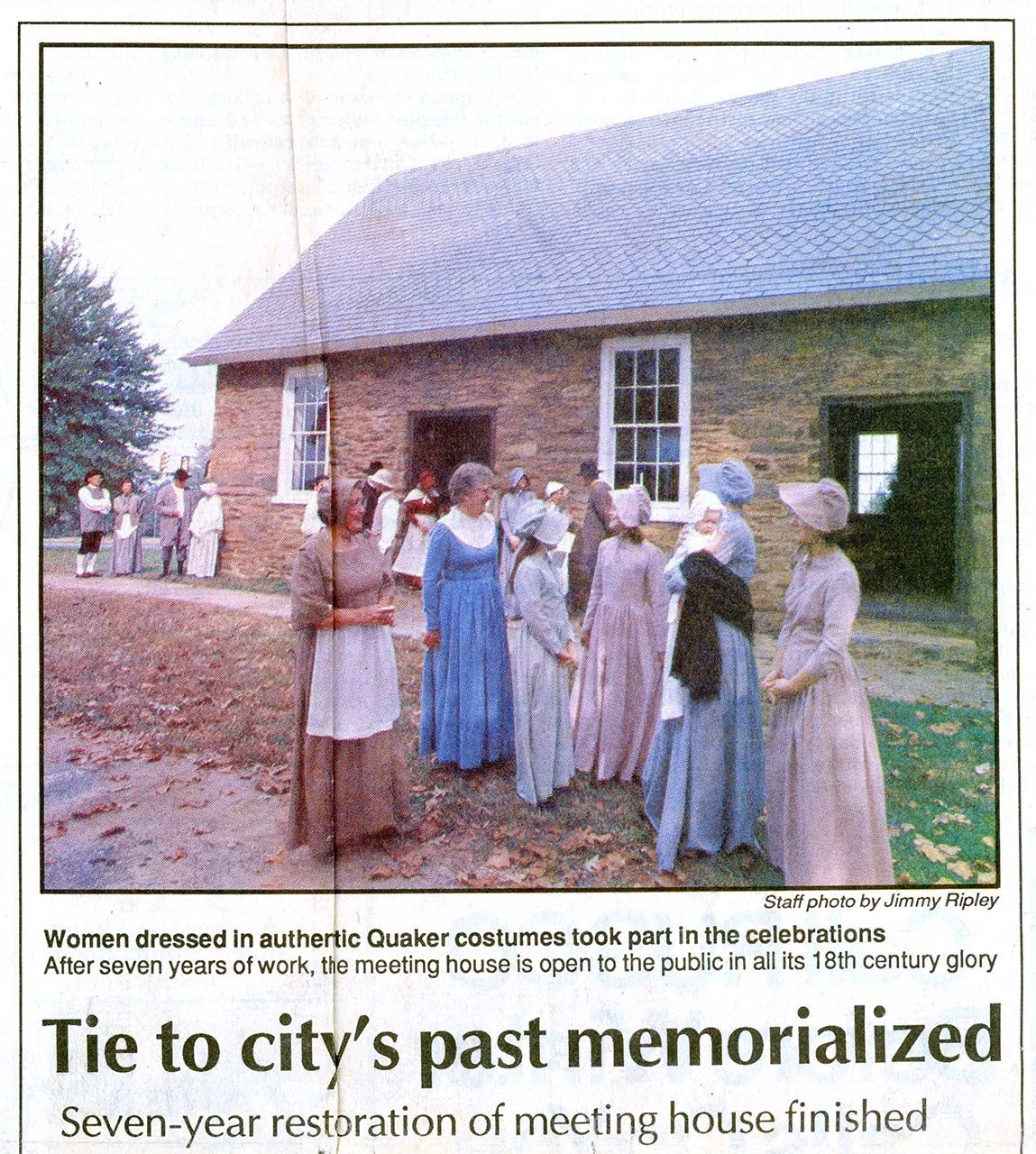
In 1983 the Bicentennial Committee for the Restoration of the South River Meeting House was formed as a community-based, non-profit organization to restore the building. The interior was returned as closely as possible to its Quaker origins. The exterior reflects the building’s storied history, with various architectural influences throughout its lifetime apparent. The restoration of the Meeting House was completed in 1989 and dedicated on October 14.